
Complex Care at Home, By Workers Trained for You
Support with the eight high intensity daily personal activities, from bowel care and PEG feeding to tracheostomy support. We support participants across Logan, Ipswich, Brisbane and Bayside.
Careful, prepared support for the parts that carry risk.
What are high intensity daily personal activities?
High intensity daily personal activities are the eight daily supports the NDIS Commission treats as higher risk, needing workers trained for that exact task.
How it works
A qualified health practitioner writes the plan for the procedure, and workers are trained against that plan for that person. Competency is checked before anyone works alone. It is not a one off. Skills are reviewed yearly, and a worker who has not done that support for three months is reassessed first.
Not medical treatment
This is disability support, delivered by trained support workers following a health practitioner's instructions. It does not have to be a nurse. Where a task cannot safely be delegated, a nurse does it instead, and that call belongs to the nurse.
How this is different from our other supports
Assistance with Daily Life is standard personal care, showering, dressing and daily routines, without the higher risk procedures. Community Nursing is clinical care by a nurse, including the assessment and training that sits behind high intensity work. If you are not sure which fits, call us and we will help you work it out.
The eight activities, and what each one covers
The Commission lists eight of these, and they are often needed in pairs, so the cards below group the ones that go together. If you cannot see the support you need here, call us and tell us what is involved.
Complex bowel care support
Non-routine treatment for severe constipation or incontinence, including laxatives, enemas or suppositories.
Enteral feeding and dysphagia
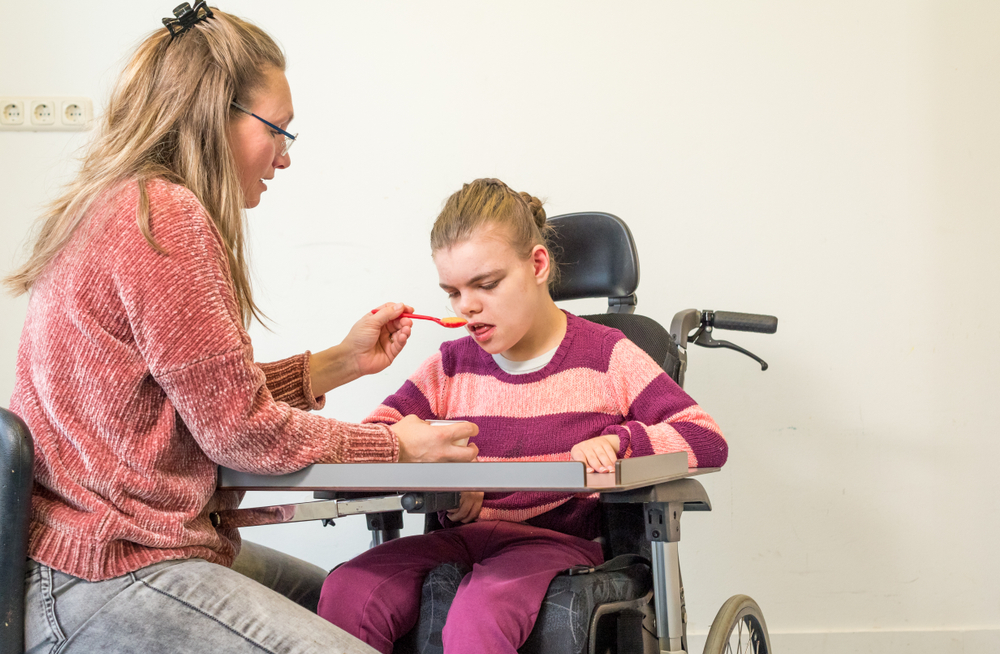
Tube feeding through the nose or stomach, plus mealtime support where swallowing is unsafe. Often needed together.
Tracheostomy and ventilator
Support for a breathing tube, and for people who rely on a ventilator. Workers are trained against both.
Urinary catheter support
Managing an indwelling or intermittent catheter safely, and knowing early what a problem actually looks like.
Subcutaneous injections
Injections given under the skin, which now includes diabetes management under the same skills descriptor.
Complex wound management
Wounds that need more than a dressing change, along with the watching and reporting that goes with them.
Staying at home, not in hospital
For a lot of people this is the support that makes home possible at all. That is the direction.
The same faces doing it
With procedures this personal, a small trained team matters more than a big roster.
Family off clinical duty
Parents and partners often learn these procedures out of necessity. This can hand them back.
Fewer things going wrong
Trained workers who know your early warning signs tend to catch problems while they are still small.
A life around the procedures
Feeding, care and appointments planned around your week, rather than your week built around them.
What this support can help you work towards
Your goals set the direction, and the support is planned around them. With high intensity supports the aim is usually steadiness: the procedures handled properly, so the rest of life gets room to happen.

How to get started
This takes more setting up than everyday support, and we will not pretend otherwise. But you do not need every document in order before you call. Start with what you know.
Get in touch
Call or send an enquiry. Tell us which of the eight are involved, the suburb, and whether there is a current plan for the procedure.
Check the fit
We check the support against our registration certificate, review the current plan and risks, and work out what worker preparation is needed. If we cannot do it safely, we say so.
Prepare and start
Workers are trained for the participant and signed off as competent before they work alone. Support starts once that is done, and gets reviewed as the health need changes. Nothing is locked in.
Where this sits in an NDIS plan
High intensity daily personal activities sit in the Core supports part of a plan, under assistance with daily life, and they attract a higher hourly rate than standard personal care. The thing people get wrong is assuming a provider has to be registered to deliver them. They do not. These supports are not on the Commission’s list requiring registration, so an unregistered provider can deliver them to a self-managed or plan-managed participant. We chose to register anyway. Every plan is different, so nothing here is a promise about your funding. Your support coordinator or plan manager can confirm what yours allows, or call us on 1300 544 958.
Other supports that might suit
High intensity support rarely runs alone. These are the ones that usually sit alongside it, or get confused with it.

Community Nursing
Clinical care at home from a registered or enrolled nurse, including the assessment and training that sits behind high intensity work.
Assistance with Daily Life
Help with showering, dressing, meals and daily routines at home, without the higher risk procedures that need extra training.

Supported Independent Living
Support with daily life where someone needs help around the home on an ongoing basis, planned as a living arrangement rather than set visits.
High intensity daily personal activities across Logan, Ipswich, Brisbane and Bayside
Hope & Integrity is based in Logan and our workers live across the region. With these supports the trained pool is small, because a worker prepared for one person’s tracheostomy cannot simply be swapped for someone else. Being nearby is what makes cover possible.
Areas we support:
Start with a simple conversation
Tell us which supports are involved, the suburb, and what plans already exist. We will check it against our registration, talk through what preparation is needed and be straight about timing. If we cannot deliver it safely, we will say so rather than take the referral.
Supporting participants across Logan, Ipswich, Brisbane and Bayside · Open Mon to Fri, 9:00am to 5:00pm
Questions about high intensity daily personal activities
The questions participants, families and support coordinators ask us most.
Does high intensity support need a nurse?
Not necessarily, and that surprises people. These are disability supports, not medical treatment, and a trained support worker can deliver most of them where the plan allows it. What has to happen is that a qualified health practitioner writes the plan, trains the worker for that participant and signs off their competency. Some tasks cannot safely be delegated at all, and then a nurse does them. That call belongs to the nurse, not to us and not to you.
Who pays for it, and does the provider have to be registered?
These supports sit in the Core part of a plan, under assistance with daily life. On registration, the honest answer is no. High intensity daily personal activities are not on the Commission’s list of supports that require registration, so an unregistered provider can deliver them to a self-managed or plan-managed participant. We are registered in group 0104 and audited against Module 1 anyway, and a provider can only deliver the activities listed on its certificate. Ask any provider which of the eight are on theirs. Every plan is different, so nothing here is a promise about your funding.
How do I know if my support counts as high intensity?
If it is one of the eight, it counts. Complex bowel care, enteral feeding, dysphagia support, tracheostomy support, ventilator support, urinary catheter support, subcutaneous injections and complex wound care. Epilepsy and seizure support has its own skills descriptor but sits outside the eight, as additional support that often runs alongside them. If you are not sure where yours lands, tell us what is involved and we will tell you.
How do I know the worker is actually trained?
Ask, and keep asking. Training has to be participant-specific, so a general certificate is not the same as being trained for your plan and your equipment. Competency is signed off before a worker supports you alone, reviewed each year, and reassessed if the plan changes or if that worker has not delivered the support for more than three months. You are entitled to ask who has been trained, on what, and when it was last checked.
Can this fit around work, school or a normal week?
Usually, though some of it is clock-driven. Feeds, medication and certain procedures have to happen at particular times, and that shapes the day more than we would like. What we can do is build the rest around your commitments and tell you early what will not bend. Say what matters most and we will start there.
Still have a question?
Call our local team on 1300 544 958. We will answer it plainly, even if the answer is that we are not the right fit.