
Choosing the right NDIS provider is one of the most important decisions for participants and their families. While many providers offer general disability support, not all are equipped to deliver clinically-led care that meets complex or high-intensity needs.
In Brisbane, the demand for more structured, medically informed, and outcome-focused disability support is growing. This is where clinically-led providers like Hope & Integrity Care Services make a real difference—by combining clinical oversight, nursing expertise, and personalised support planning to improve participant outcomes in a meaningful way.
What Does Clinically-Led NDIS Support Mean?
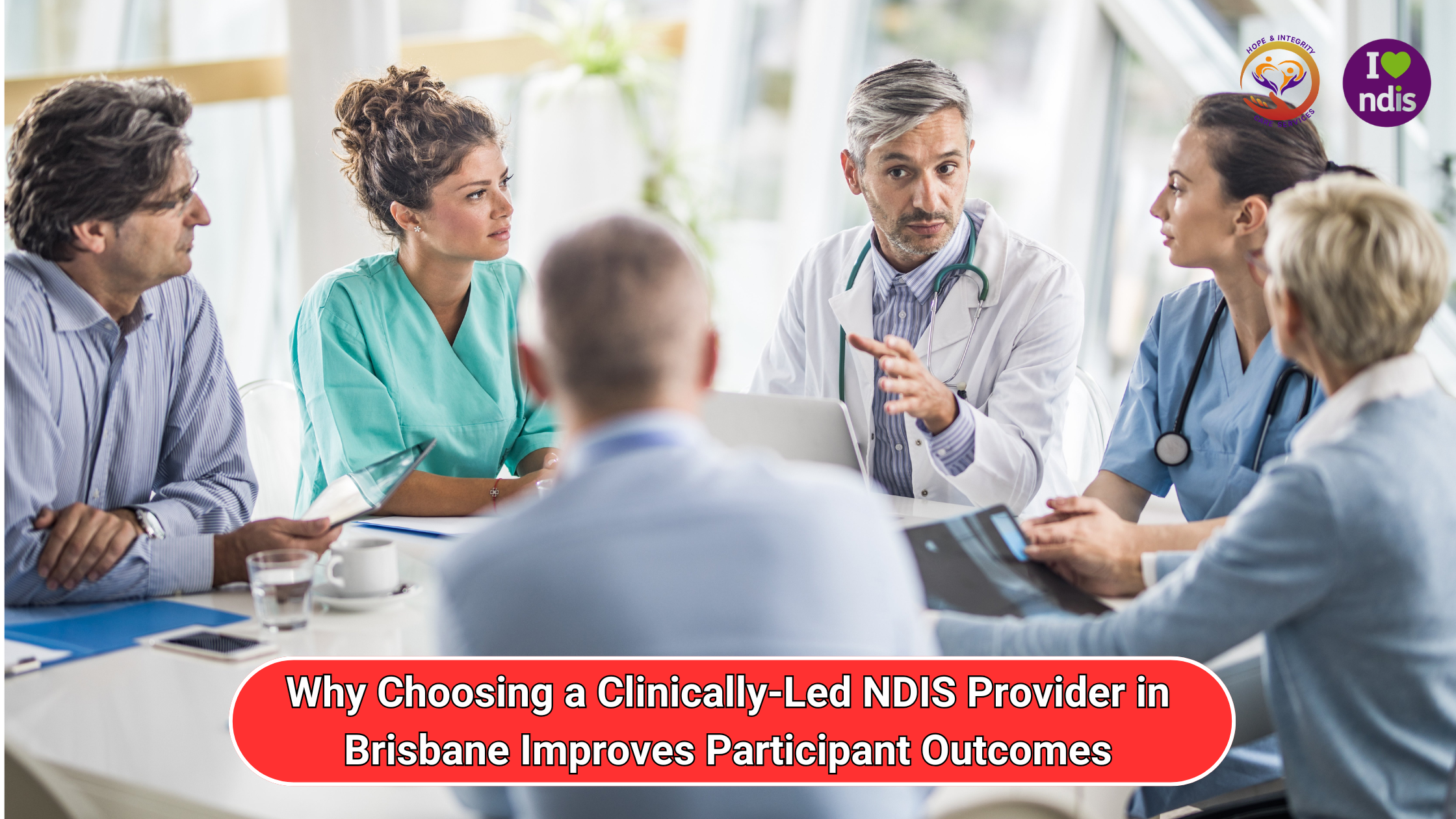
A clinically-led NDIS provider is one where care delivery is guided or overseen by qualified health professionals such as registered nurses (RNs) or clinicians. This ensures that support is not only compassionate but also safe, structured, and aligned with best-practice health standards.
Unlike standard support models, clinically-led services focus on:
- Health stability and risk management
- Complex and high-intensity care needs
- Medication and clinical monitoring support
- Behavioural and health-related integration
- Evidence-based care planning
This level of oversight is especially important for participants with complex disabilities, chronic conditions, or high-support requirements.
Why Clinical Leadership Matters in Disability Support
Many participants require more than daily assistance—they need care that understands both their medical and behavioural needs together. This is where clinical leadership becomes essential.
A clinically-led approach ensures:
1. Safer Care Delivery
With RN or clinical oversight, risks are identified early. This reduces hospital admissions, medication errors, and unmanaged health complications.
2. Better Care Coordination
Participants often receive multiple supports (nursing, behaviour support, daily living assistance). Clinical leadership ensures all support staff work together instead of operating separately.
3. Improved Decision-Making
Care decisions are based on clinical assessment, not just routine support delivery. This leads to more accurate and responsive care plans.
4. Stronger Support for Complex Needs
Participants requiring high-intensity support benefit from structured clinical input, ensuring their health and wellbeing are consistently monitored.
The Gap in Standard NDIS Providers
While many NDIS providers deliver valuable support, not all are structured to manage complex care needs effectively.
Common limitations of non-clinical providers include:
- Limited medical oversight
- Generalised care planning
- Lack of integration between behaviour and health support
- Inconsistent monitoring for high-risk participants
- Reduced ability to respond to complex health changes
For participants with higher support needs, these gaps can impact safety, consistency, and long-term outcomes.
This is why clinically-led models are becoming increasingly important in Brisbane’s disability support sector.
How Clinically-Led Support Improves Participant Outcomes
Participant outcomes improve significantly when care is structured around clinical expertise and holistic planning.
1. Enhanced Health Stability
Regular clinical monitoring helps maintain stability in chronic conditions and reduces preventable health issues.
2. More Personalised Care Plans
Each participant receives a tailored care approach based on both medical and lifestyle needs—not a one-size-fits-all model.
3. Better Behavioural Support Integration
When behaviour support and clinical care work together, participants experience more consistent emotional and behavioural stability.
4. Increased Independence Over Time
With the right support structure, participants are gradually encouraged to build independence safely and confidently.
5. Reduced Care Disruptions
Clinically-led providers are better equipped to manage emergencies and changing health needs without interrupting care continuity.
Why Brisbane Families Are Choosing Clinically-Led Providers
Families in Brisbane are becoming more aware that quality disability support goes beyond basic daily assistance. They are looking for providers who can offer:
- Clinical confidence in care delivery
- Strong communication with families
- Reliable high-intensity support capability
- Consistency in staffing and care approach
- A focus on long-term wellbeing, not just short-term support
This shift is driving demand for providers who combine healthcare expertise with personalised NDIS support delivery.

How Hope & Integrity Care Services Delivers Better Outcomes
At Hope & Integrity Care Services, care is built on a clinically informed support model designed to improve participant safety, independence, and quality of life.
Our approach includes:
- RN-led oversight for complex care participants
- Integrated support combining nursing, behaviour, and daily living assistance
- High-intensity care capability for participants with advanced needs
- Individualised care planning focused on real outcomes
- Strong focus on dignity, safety, and participant choice
This ensures that participants are not just supported—but actively guided toward improved wellbeing and independence.
The Importance of Choosing the Right Provider
Selecting an NDIS provider should never be based on availability alone. It should be based on capability, experience, and clinical strength—especially for participants with complex needs.
Before choosing a provider, families should consider:
- Do they have clinical or RN oversight?
- Can they support high-intensity care needs?
- Do they integrate behaviour and health support?
- Are care plans personalised and reviewed regularly?
- Do they focus on long-term outcomes or basic support only?
The answers to these questions can significantly impact participant safety and progress.
Final Thoughts
Choosing a clinically-led NDIS provider in Brisbane is not just about receiving support—it is about ensuring safer care, better coordination, and improved long-term outcomes.
Providers like Hope & Integrity Care Services are helping raise the standard of disability support by combining clinical expertise with person-centred care. This approach ensures participants receive the right level of support at the right time, leading to more stable, independent, and fulfilling lives.
Frequently Asked Questions
What is a clinically-led NDIS provider?
A clinically-led NDIS provider is one where care is guided by qualified health professionals such as registered nurses, ensuring safer and more structured support.
Why is clinical oversight important in NDIS services?
Clinical oversight helps improve safety, reduce risks, and ensure participants with complex needs receive appropriate and effective care.
Who benefits most from clinically-led support?
Participants with high-intensity needs, chronic conditions, or complex disabilities benefit most from clinically-led disability support services.
How does clinically-led care improve participant outcomes?
It improves outcomes by ensuring better care coordination, personalised support planning, and continuous health monitoring.
Is clinically-led support available in Brisbane?
Yes, several providers in Brisbane offer clinically-led NDIS services, including RN-supported high-intensity care and integrated disability support.